 |
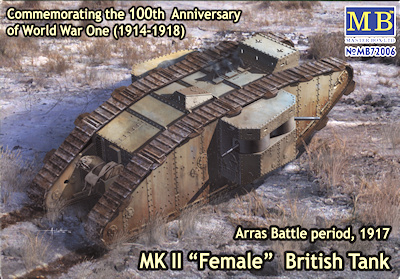
Mark II Female, Arras Battle, 1917 | |||
| Masterbox Kit #72006 | Preview by Doug Chaltry | |||
 |
| I
think that Masterbox is most well known for their line of
1/35th scale figures in multiple genres, but several
years ago they branched out into the 1/72nd armor arena
with several World War I era British tanks and armored
cars. I own this kit and one of their armored cars, and
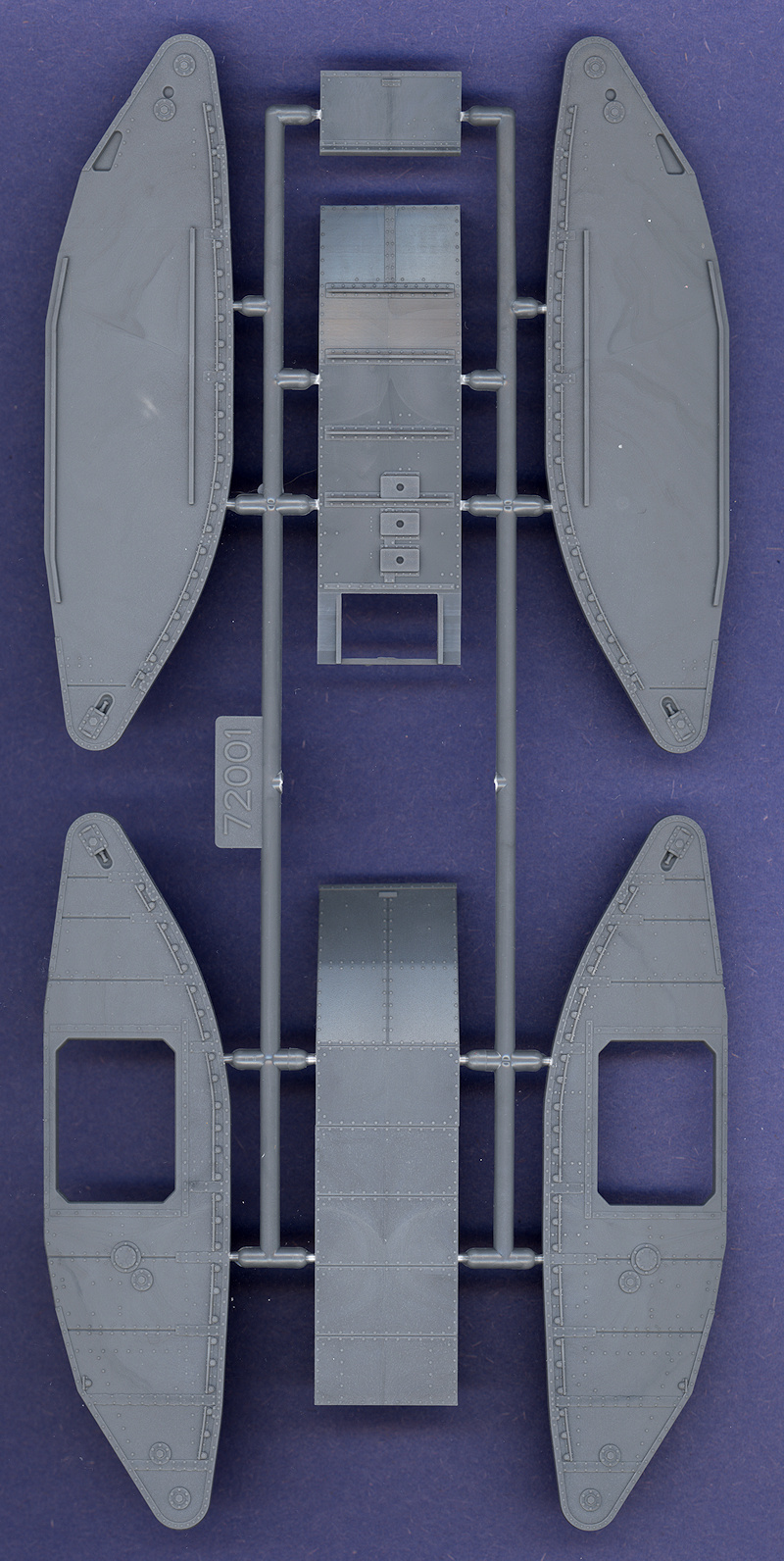
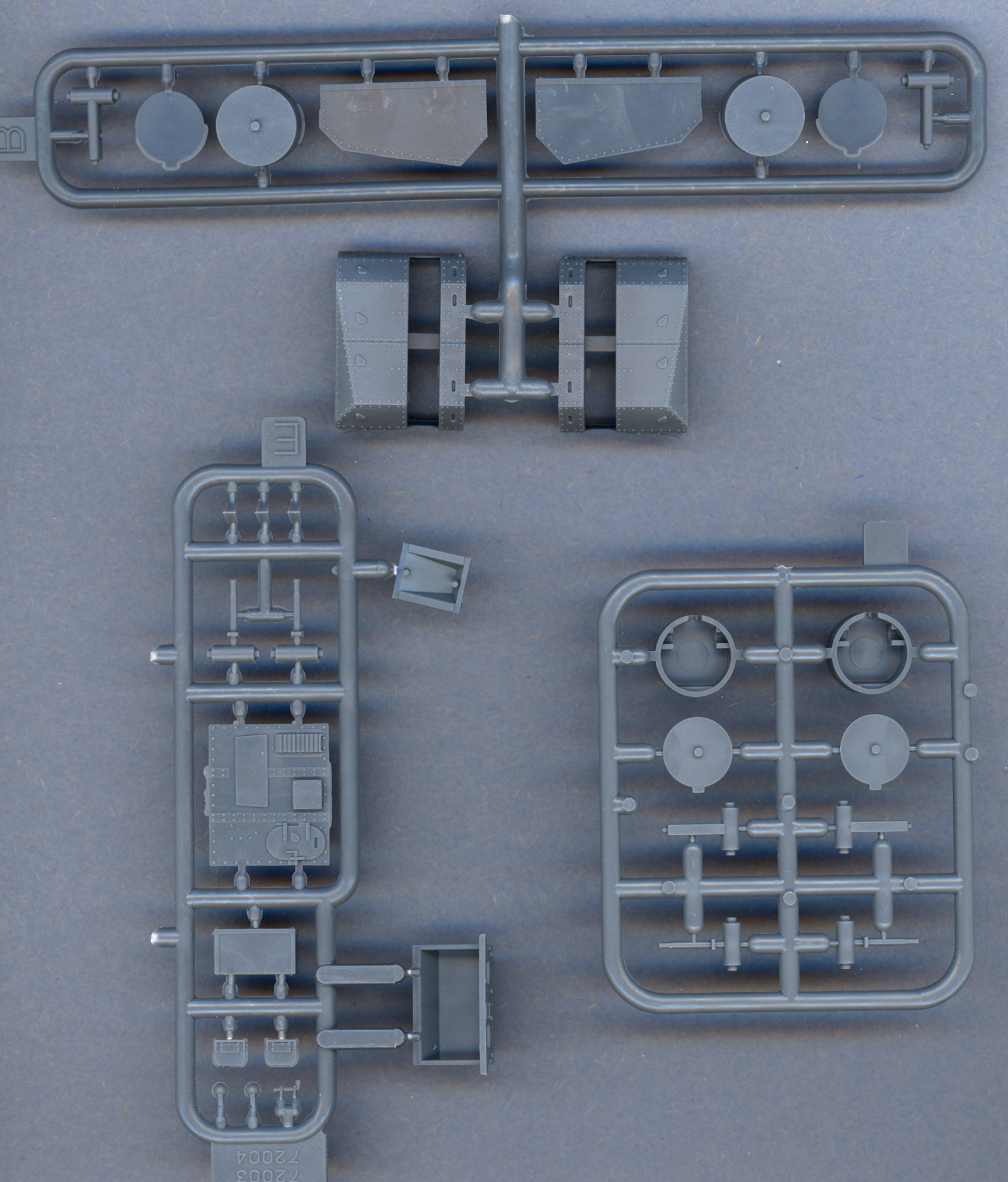
they are very fine models indeed. The amount of detail
molded onto the plastic parts in this kit is amazing.
This will be a dry-brusher's dream to paint. The only
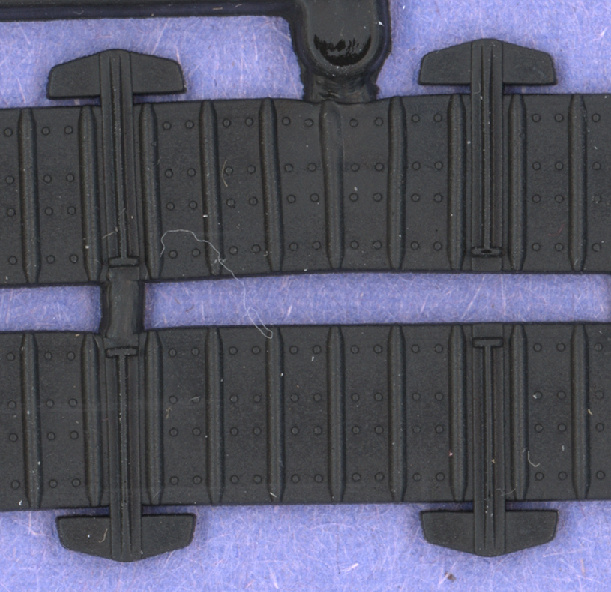
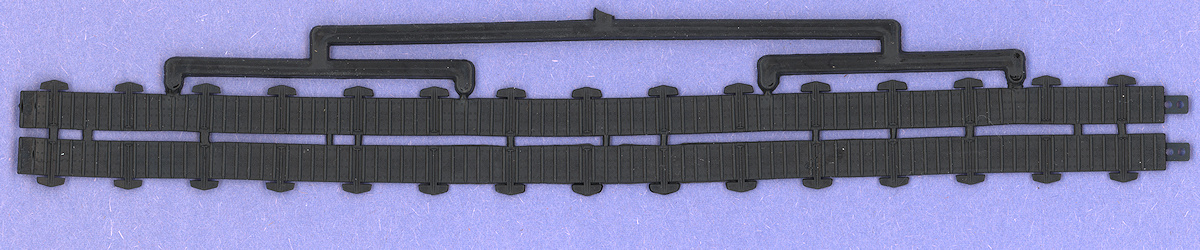
weakness that I can see in the kit are the tracks.
Masterbox has pretty much crippled this kit was such an
abomination of tracks. Luckily, there are aftermarket
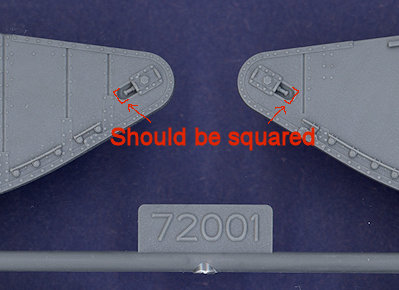
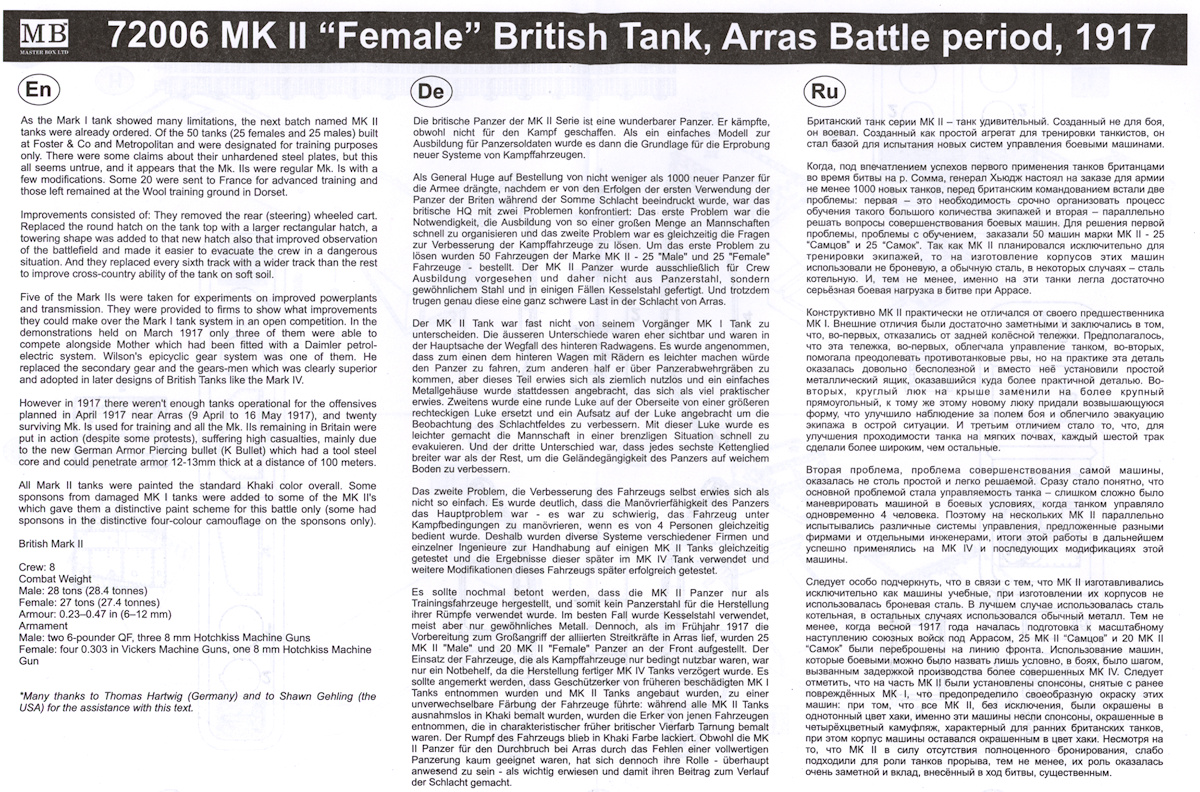
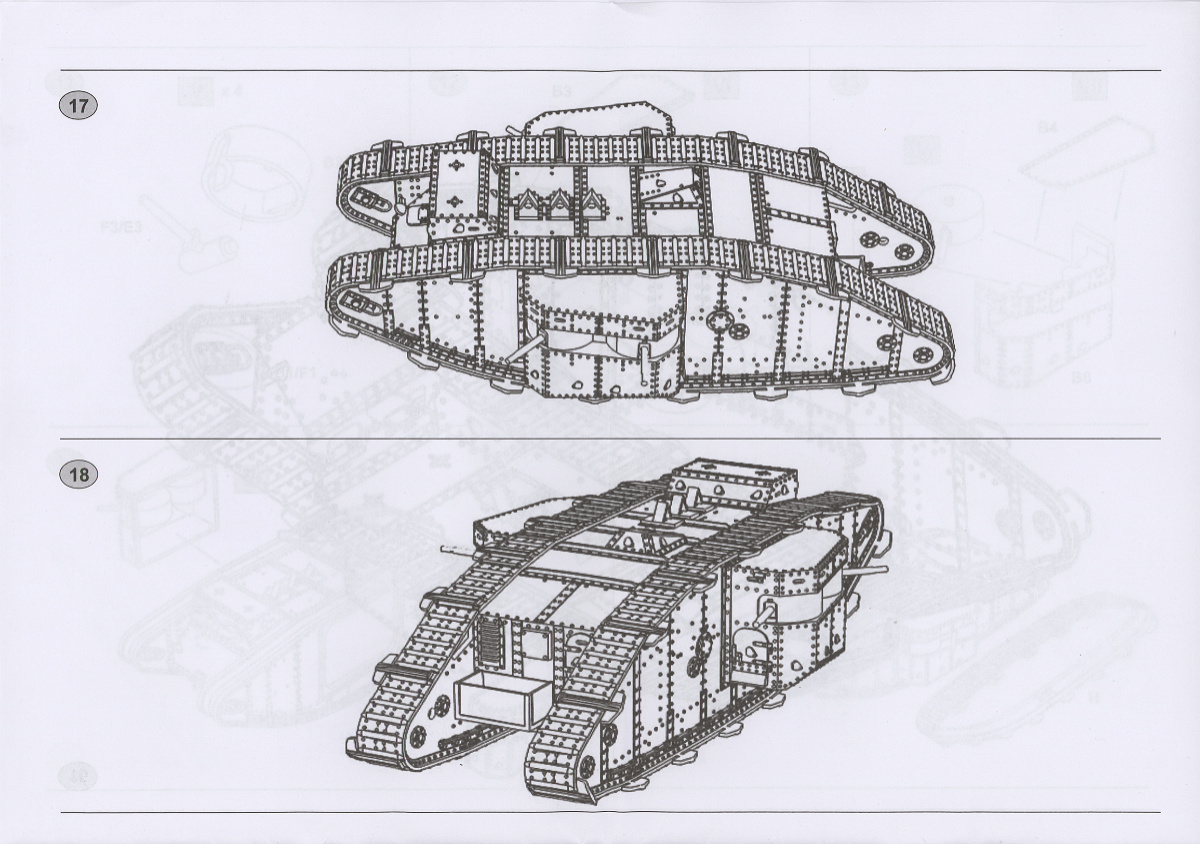
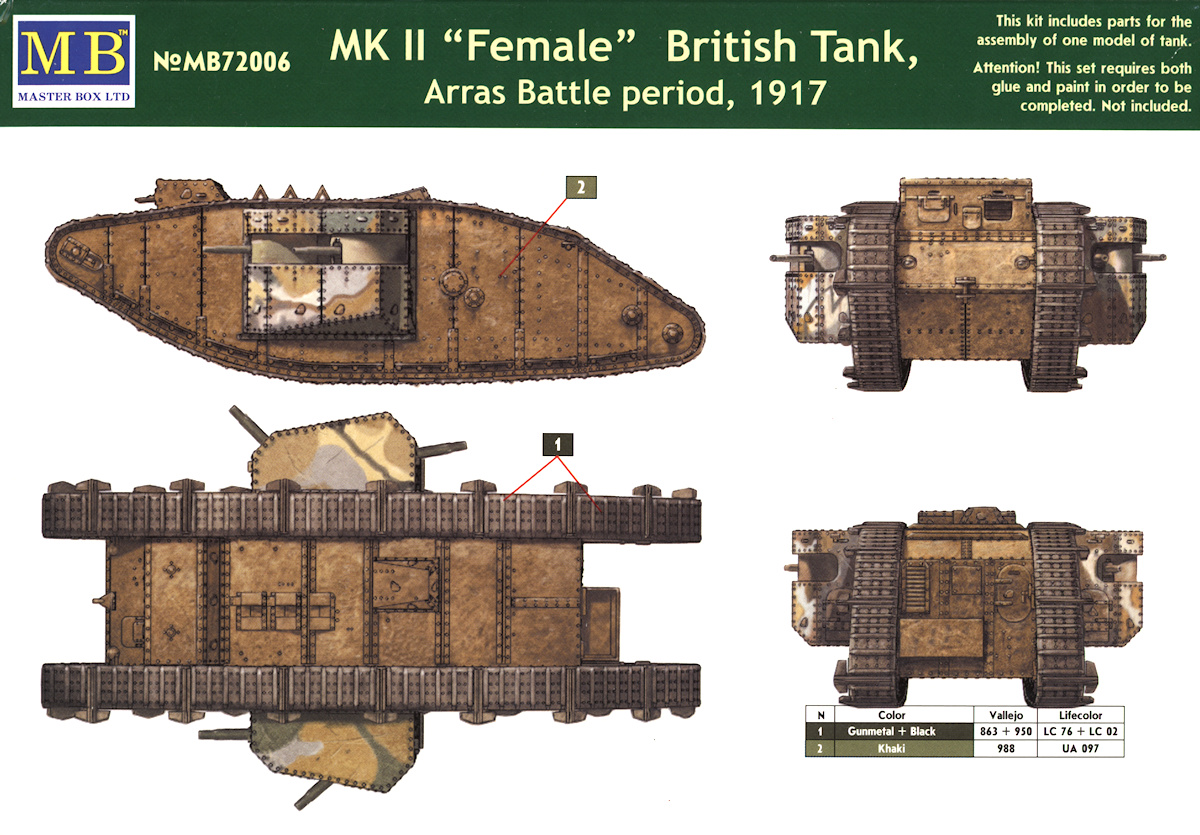
tracks available. Masterbox markets several variants of both the Mark I and the Mark II, sharing many of the parts between them. The real Mark II was a slightly modified version of the Mark I and both Marks used the same hull design. Both had male (with cannons) and female (with machineguns) versions. From my research, the primary difference between the Mark I and Mark II is that the Mark II was meant to be only a training tank, and thus its armor was not hardened, making it vulnerable to even machinegun fire. The kit instructions state that this is an untrue rumor, however, I don't know where they got that information. All of my reading, both published and online, state this to be the case. The female tanks at the Battle of Arras were armed with Lewis machineguns instead of the earlier Vickers guns (both machinegun types are included in the kit). There are three additional visual differences to the Marks as well: 1) The track tensioning apertures on the front horns of the hull should have a slightly different shape to them, which Masterbox has not changed because they use the same hull for this Mark II as they did for the Mark I. But it is such a minor difference in shape that it bothers me not at all. Had I been aware of this difference prior to construction, it likely would have been a fairly easy modification to make. Illustrated below:
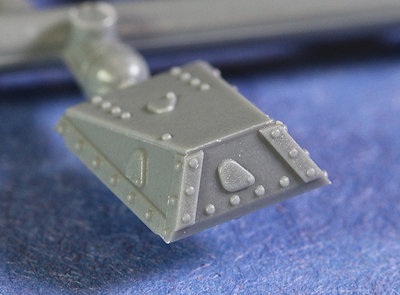
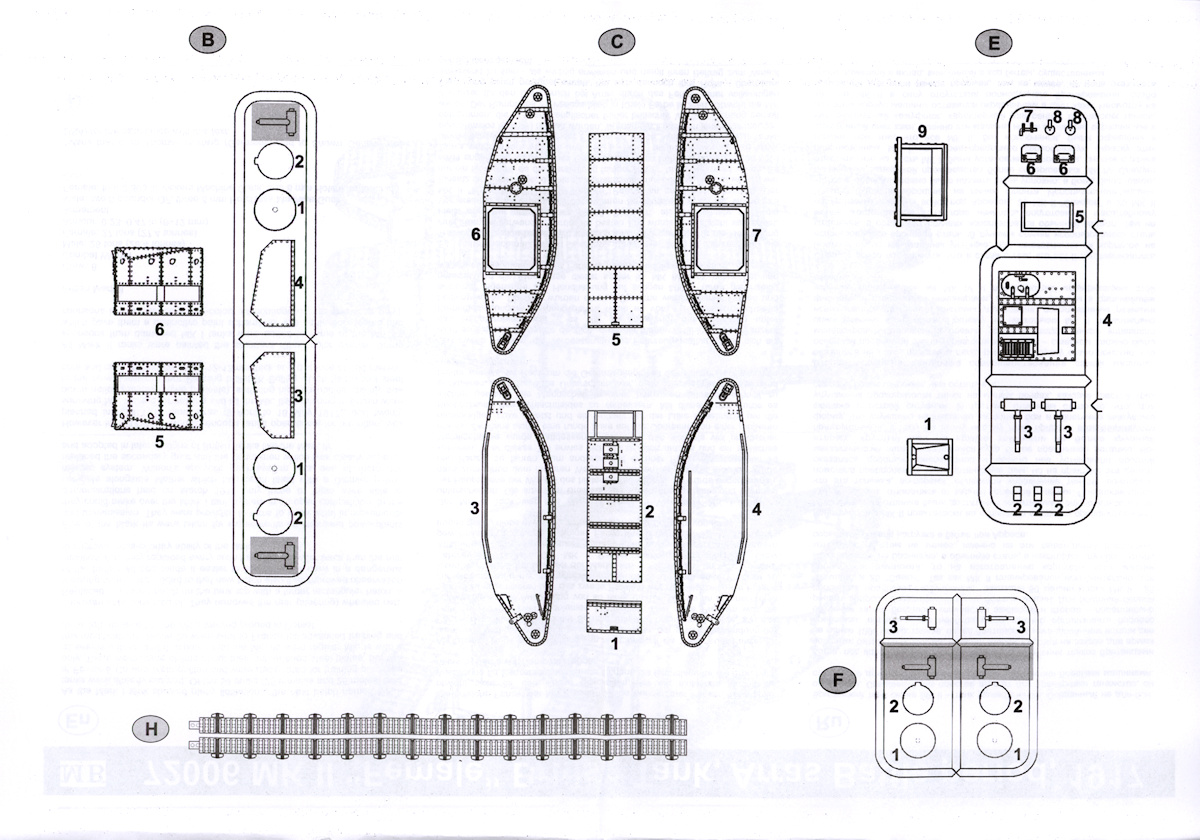
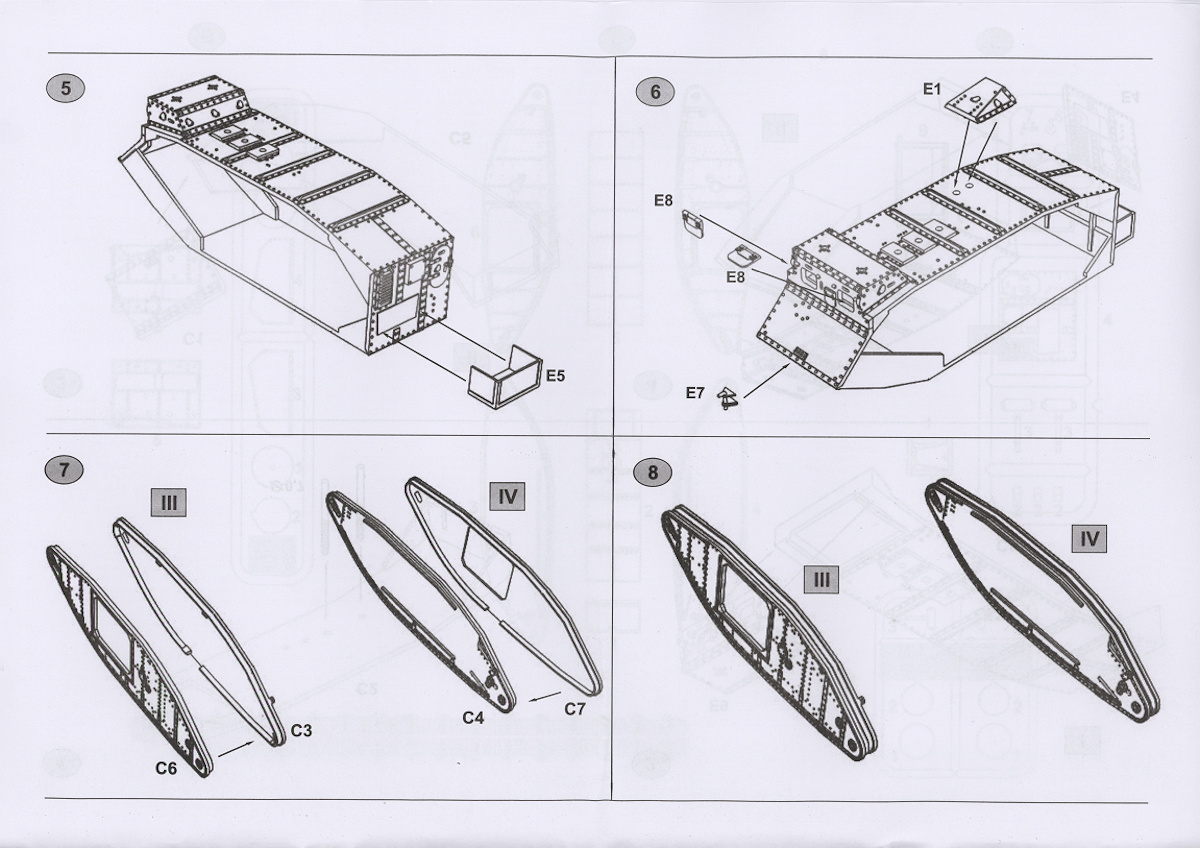
2) The round escape hatch on the top of the hull of the Mark I was replaced on the Mark II with a box-shaped observation post with a hinged hatch lid. This is correctly reproduced in this kit with Part #E1:
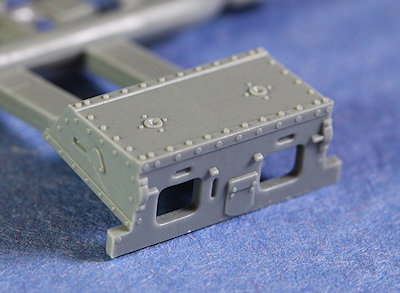
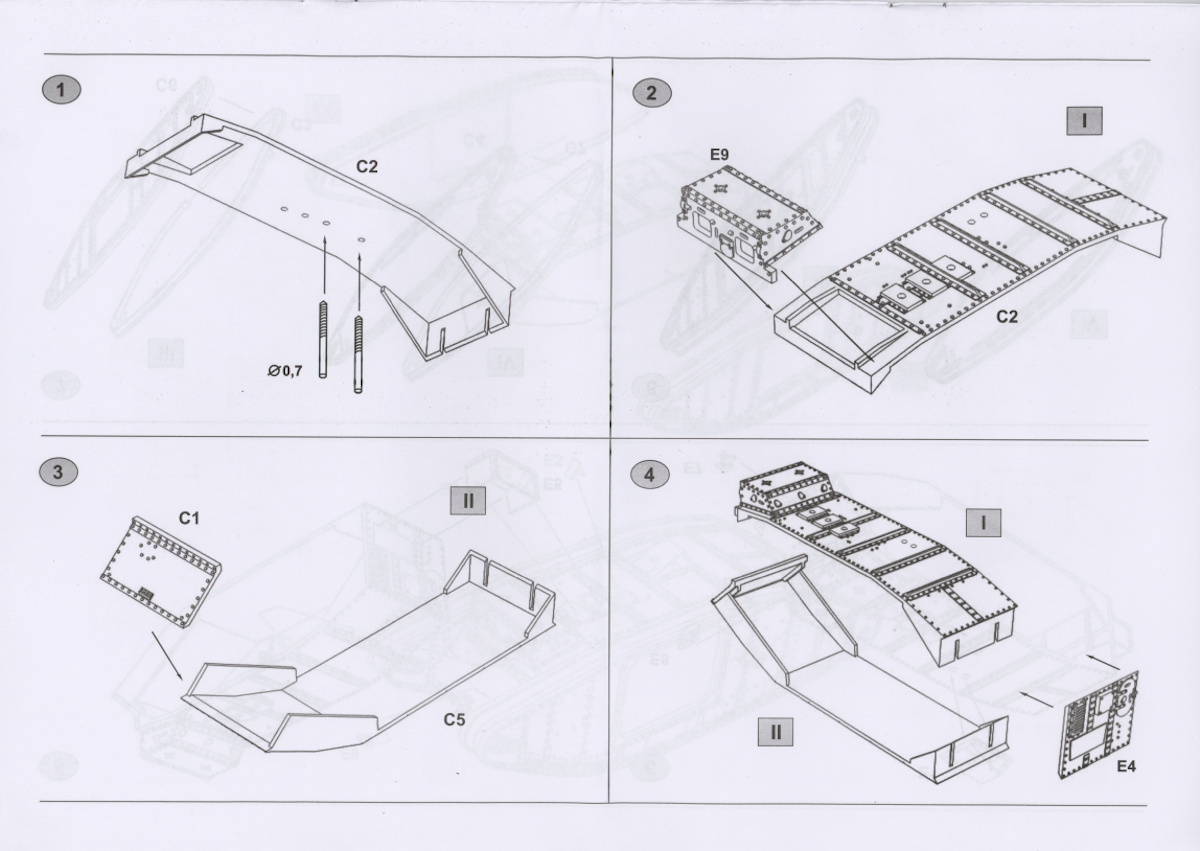
3) The intention was to introduce new, wider tracks on these tanks, which never happened for these Marks (I think they arrived for the Mark IV?). Consequently, the Mark II's driver's cab was narrowed a bit on both sides to accomodate the wider tracks. The cab piece included in this kit (Part #E9) is indeed correct for the Mark II:
As for scale accuracy, I think it is a highly accurate kit. The table below shows measurements of the kit after construction, compared to dimensions from the references listed at the bottom of this article. The only significant error there is the track width (11% too wide), but even that I don't think is too terrible of an error, because it's still less than a millimeter.
Why don't I like these tracks? Three reasons: 1) They are very thick.
No markings are depicted for the color scheme on the rear of the box, and no decals are included in the kit. The references below, however, indicate that the tanks at the Battle of Arras did have some simple markings. All of them had an identifying number (such as C-21) painted on the box on the rear hull. And at least several of the tanks had names, painted in small lettering on the hull sides forward of the side sponsons. I have seen photos of at least two tanks that also had small black ovals painted at various places along the hull and sponson sides meant to replicate the appearance of vision ports, as supposedly the Germans were instructed to shoot at the vision ports. One may want to consider adding such to their paint jobs when building the kit. References British Battle Tanks
World War I to 1939, by D. Fletcher. Osprey
Publishing, 2016 |
| Back to Masterbox Kit List | Back to Home Page |
| Article Last Updated: 13 February 2026 |